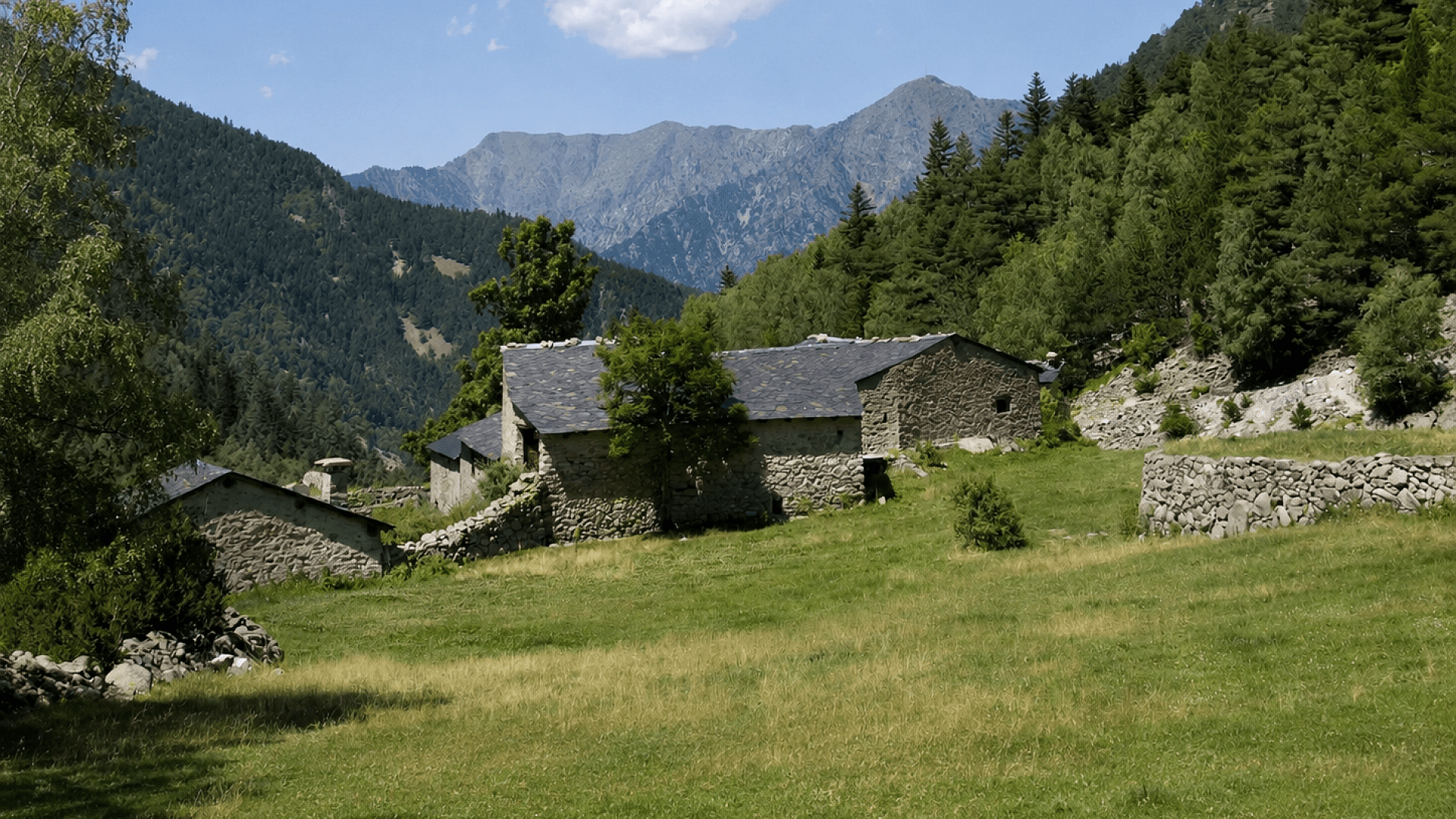
When walking along the paths of Andorra, particularly in the country’s higher parishes, it is easy to spot small stone buildings that blend perfectly into the landscape. Some remain almost intact, while others have lost part of their roofs or have been restored and converted into homes or restaurants. These are the bordas, one of the most characteristic features of traditional Andorran architecture.
Although they may now resemble mountain refuges or old country houses, bordas were originally agricultural buildings connected to a way of life in which farming, livestock and the changing seasons determined the daily rhythm.
What exactly was a borda?
Bordas were built close to meadows and grazing areas, usually some distance from the family home. Their purpose was to make life easier for farmers and livestock breeders, who did not have to return to the village every day.
They generally had two levels. The ground floor sheltered the animals, while the upper floor was used to store hay and fodder for the winter. Some also had a small space where the farmer, shepherd or family could rest or spend the night during particularly long working days.
This arrangement made it possible to benefit from the warmth generated by the animals while keeping the fodder dry and protected from moisture.
Buildings shaped by the landscape
Bordas were built using materials found in their immediate surroundings: stone, earth and wood. Their thick walls helped protect the interior from the cold, while their sloping roofs, traditionally made with wooden beams and stone slabs, allowed rainwater and snow to run off.
No two bordas were exactly alike. Their size, orientation and layout depended on the terrain, the proximity of the meadows and the needs of each family. Rather than imposing themselves on the mountain, they adapted to it.
Summer determined the winter
During the summer, the meadows were cut and the grass was left to dry before being transported and stored inside the bordas. This was long and demanding work involving different members of the family.
The amount of hay collected was essential because it would feed the animals when snow covered the pastures. Bordas were therefore much more than simple storage buildings: they formed part of a survival strategy organised around the changing seasons.
Tools and other equipment were also kept inside. People ate and rested there and, when necessary, spent the night.
Bordas, cortals, threshing floors and shepherds’ huts
Andorra’s rural landscape contained several different types of structures. Bordas were used to shelter livestock and store fodder; threshing floors were used to process grain; and huts provided shelter for shepherds.
Orris were used to manage and milk flocks of sheep and to make cheese. A cortal, meanwhile, was an agricultural or livestock farming area located outside the village. It could include fields, meadows, bordas, huts, paths and stone walls.
Together, these features demonstrate that the landscape we consider natural today is also the result of centuries of farming, grazing and human labour.
From working buildings to cultural heritage
During the 20th century, as Andorra’s economy changed and many traditional agricultural activities gradually disappeared, numerous bordas lost their original purpose. Some were abandoned, while others continued to be used as storage buildings or shelters.
Over time, their historical value began to be recognised. Many were restored and converted into homes, accommodation or restaurants. This transformation has helped preserve part of Andorra’s rural heritage, although it also presents the challenge of respecting the original materials, structure and relationship with the surrounding landscape.
Much more than stone walls
Bordas were neither palaces nor imposing monuments. They were simple buildings constructed for work. This is precisely what makes them so valuable: they tell the story of everyday life in Andorra.
Their walls speak of long winters, summers spent gathering hay and families who learned to make use of the mountain’s resources. The next time you see a borda beside a path, you may look at it differently: behind that wooden door lies a way of life that helped shape the Andorra we know today.